What Is RPA?
Anil Yarimca
TL;DR
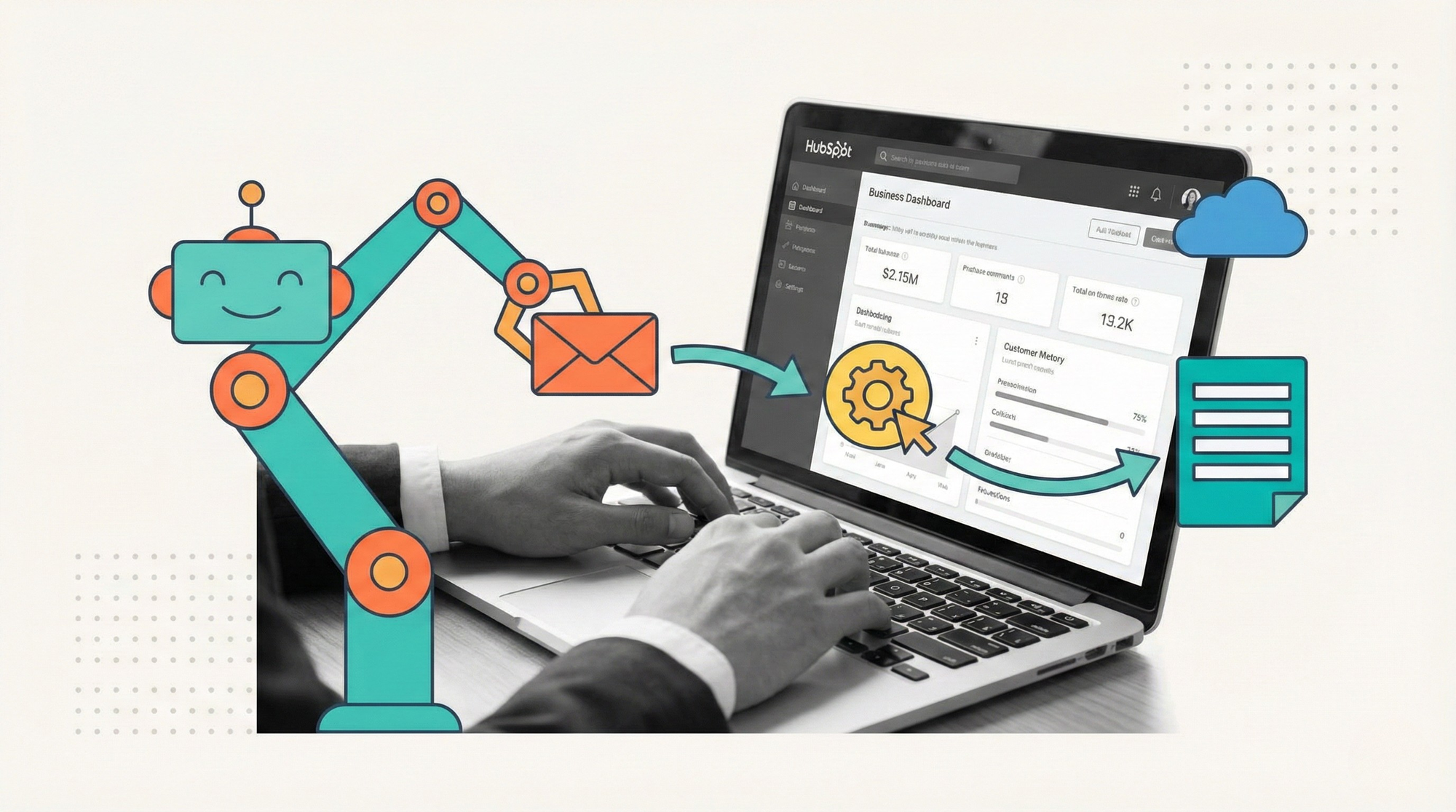
RPA, or Robotic Process Automation, is a way to automate repetitive, rule-based digital work by mimicking how humans interact with software. It is most effective when used to execute well-defined processes at scale, not to replace judgment or decision-making. RPA succeeds in production when it is designed as part of a workflow, not as a standalone bot.
RPA is one of the most widely adopted automation technologies in enterprises, yet it is also one of the most misunderstood.
Some teams think of RPA as screen scraping. Others see it as a temporary workaround until systems are integrated properly. Many associate it with brittle bots that break when a UI changes.
All of these perceptions contain a grain of truth, but they miss the bigger picture.
RPA is not about replacing systems or intelligence. It is about execution. Specifically, executing structured work reliably across systems that were never designed to work together.
Understanding what RPA actually is, and what it is not, is essential before deciding where it fits in a modern automation or AI strategy.
What RPA actually means
RPA stands for Robotic Process Automation.
In practical terms, RPA uses software bots to replicate the actions a human user would take when interacting with applications. This includes clicking buttons, entering data, reading screens, and moving information between systems.
The key characteristics of RPA are:
- It operates at the user interface level
- It follows explicit rules
- It works across systems without deep integration
RPA does not understand intent. It does not reason. It executes.
This is why RPA is best suited for processes that are stable, structured, and well-defined.
What RPA is good at
RPA excels at high-volume, repetitive work.
Typical use cases include:
- Copying data between systems
- Processing invoices or forms
- Updating records based on rules
- Reconciling reports
- Handling standardized back-office tasks
In these scenarios, RPA delivers value because it is faster than humans, consistent, and available around the clock.
Industry research from organizations like Gartner consistently highlights that RPA delivers the highest ROI when applied to mature, rule-based processes rather than complex decision-making tasks.
What RPA is not
RPA is not artificial intelligence.
While RPA can be combined with AI, on its own it does not learn, adapt, or make probabilistic decisions. It executes exactly what it is told.
RPA is also not a replacement for system integration. It works on top of existing systems rather than changing how they are designed.
Finally, RPA is not a shortcut around process design. Automating a broken process usually produces a faster broken process.
How RPA works at a system level
At a system level, RPA consists of three main elements.
Bots perform the work. They execute tasks according to predefined logic.
Control layers manage when bots run, what work they pick up, and how failures are handled.
Monitoring and logging provide visibility into execution, errors, and performance.
When these elements are combined properly, RPA becomes an operational system rather than a collection of scripts.
RPA vs traditional automation
Traditional automation often relies on APIs and direct system integration.
RPA operates at a different layer. It interacts with systems the same way a human does.
This makes RPA especially useful when:
- APIs are unavailable
- Systems are legacy or proprietary
- Integration would take too long or cost too much
However, it also means RPA is sensitive to UI changes and requires stronger operational discipline to remain stable.
RPA in production environments
The biggest difference between demo RPA and production RPA is not tooling. It is design.
Production RPA requires:
- Queues to manage work at scale
- Triggers to start processes reliably
- Exception handling for system and business errors
- Orchestration to coordinate bots and dependencies
- Monitoring to detect issues early
Most RPA failures happen when these elements are missing.
This is why many experienced teams say RPA is easy to start and hard to operate.
RPA and workflows
RPA bots should not operate in isolation.
In mature systems, bots are steps inside workflows. The workflow controls execution. The bot performs a task.
This separation makes systems more resilient. If a bot fails, the workflow decides what happens next.
This approach aligns RPA with broader workflow orchestration principles that are well established in distributed systems and business process management.
RPA and AI
RPA and AI are increasingly used together, but they play different roles.
RPA executes actions. AI interprets information or makes judgments.
For example:
- AI extracts data from documents
- RPA enters that data into systems
- AI classifies or validates
- RPA completes the transaction
This combination is often called intelligent automation. The key is that RPA remains responsible for execution, while AI handles uncertainty.
Guidance from OpenAI and other AI engineering organizations consistently emphasizes that AI systems need structured execution layers. RPA provides that layer when integrated correctly.
Organizational realities of RPA
RPA is as much an organizational change as a technical one.
Bots need ownership. Someone must monitor runs, handle exceptions, and update logic when systems change.
When RPA is treated as a one-time build, it decays. When it is treated as an operational capability, it delivers sustained value.
This is why many organizations eventually establish RPA centers of excellence or automation teams.
How modern platforms extend RPA
Modern automation platforms extend classic RPA patterns.
They combine RPA with workflows, queues, triggers, AI agents, and human-in-the-loop steps.
Platforms like Robomotion position RPA as one execution capability among many. Bots operate inside workflows, alongside APIs, AI, and manual steps.
This reduces the brittleness traditionally associated with RPA and makes it easier to evolve over time.
External perspective on RPA
RPA has followed a familiar pattern in enterprise technology.
Early hype focused on speed and headcount reduction. Reality revealed the importance of governance, design, and operations.
Independent analysis from firms like McKinsey has repeatedly shown that automation programs succeed when they focus on process quality and operating models, not just tools.
RPA fits into this broader lesson.
FAQs
What is RPA in simple terms?
RPA is software that performs repetitive digital tasks by following rules, just like a human user would.
Is RPA the same as AI?
No. RPA follows rules. AI handles uncertainty and learning. They are often used together.
When should RPA be used?
When processes are stable, repetitive, and well-defined, especially across multiple systems.
Does RPA replace APIs?
No. RPA complements APIs when integrations are not available or practical.
Why do RPA projects fail?
Most failures come from poor process design, lack of exception handling, and missing operational ownership.
Is RPA still relevant with AI agents?
Yes. AI agents still need reliable execution layers. RPA provides that execution.
Conclusion
RPA is not outdated, and it is not magic.
It is a practical technology for executing structured work in complex digital environments. When designed as part of a workflow, with proper orchestration and exception handling, it becomes a reliable foundation for automation.
Teams that understand what RPA is, and what it is not, build systems that last. Teams that expect RPA to think for them are usually disappointed.
In modern automation, RPA is not the end goal. It is one of the core building blocks that make execution possible.