What Is Decision Automation?
Anil Yarimca
TL;DR
Decision automation is the practice of automating how decisions are made, not just how tasks are executed. It combines rules, data, and sometimes AI to produce consistent decisions at scale while keeping humans involved where judgment or risk is high. Most production failures happen when decisions are automated without clear boundaries, ownership, or visibility.
Many automation initiatives focus on actions. Move this data. Trigger that system. Run this process faster.
In production, actions are rarely the hard part. Decisions are.
Which request should be approved. Which case should be escalated. Which data is trustworthy. Which outcome is acceptable. These decisions determine whether automation creates value or risk.
Decision automation exists because organizations need to make the same types of decisions repeatedly, consistently, and at scale. Doing this manually does not scale. Doing it blindly creates risk.
Understanding decision automation requires separating decision-making from execution. This separation is where most teams struggle.
What decision automation actually means
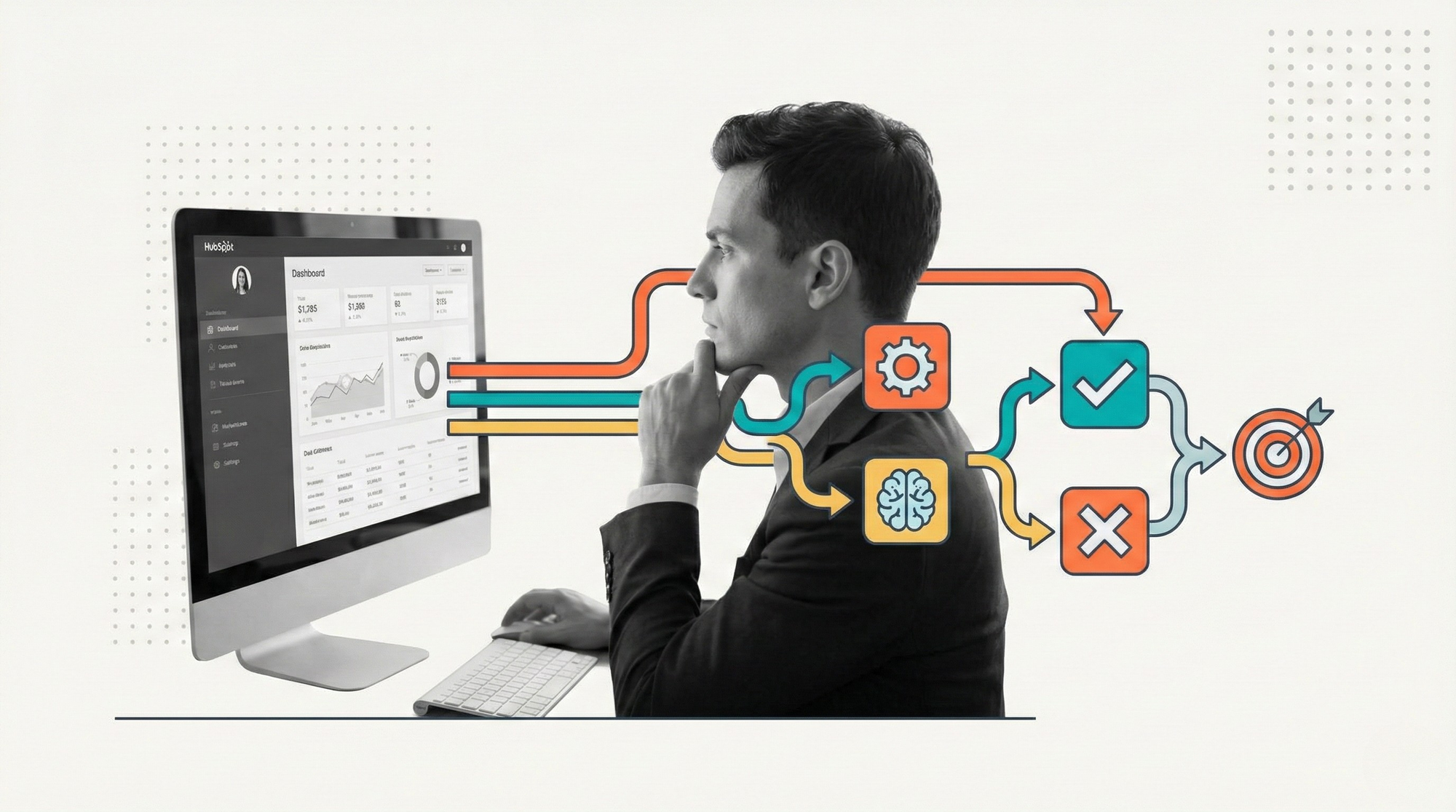
Decision automation refers to automating the logic that determines what should happen next.
Instead of a human deciding every time, the system evaluates inputs against defined criteria and produces a decision. That decision may trigger an action, route work, or request human input.
Decision automation does not mean all decisions are made by machines. It means decisions are made intentionally, using systems, rather than informally or ad hoc.
Decision automation vs task automation
Task automation focuses on doing work faster. For example, entering data or sending notifications.
Decision automation focuses on choosing what should happen. For example, approve or reject, continue or stop, retry or escalate.
In many systems, task automation exists without decision automation. Bots perform actions, but humans still decide everything. This limits scale.
In other systems, decisions are embedded implicitly inside scripts or prompts. This creates hidden logic that is hard to audit.
Decision automation makes decision logic explicit and manageable.
Decision automation vs rule-based logic
Decision automation often uses rules, but it is not limited to simple if-then logic.
Modern decision automation can include:
- Deterministic rules
- Thresholds and scoring
- Policies and constraints
- AI-assisted evaluation
- Confidence-based routing
The defining feature is not how decisions are made, but that they are made systematically rather than informally.
This distinction is emphasized in decision management literature and operational research, including work referenced by organizations like Gartner on decision intelligence.
Why decision automation matters in production
Production systems operate under pressure.
Volumes increase. Edge cases appear. Regulatory scrutiny grows. Decisions must be consistent and explainable.
Without decision automation:
- Decisions drift over time
- Outcomes vary between operators
- Accountability becomes unclear
- Scaling introduces risk
Decision automation creates a shared source of truth for how decisions are made.
Common examples of decision automation
Decision automation appears across many domains.
In finance, systems decide whether transactions are approved, flagged, or escalated.
In customer operations, systems decide how requests are routed or prioritized.
In compliance, systems decide whether cases meet policy or require review.
In IT operations, systems decide when to retry, fail, or trigger remediation.
In all cases, automation handles volume. Humans handle exceptions.
Decision automation and AI
AI is often used inside decision automation, but it is not the same thing.
AI helps interpret data, detect patterns, or estimate likelihood. Decision automation defines how those outputs are used.
For example, an AI model may score risk. Decision automation defines what score triggers escalation.
This separation is critical. Treating AI output as a decision is one of the most common production mistakes.
Guidance from AI engineering organizations like OpenAI consistently stresses that AI outputs should be evaluated and constrained before driving actions.
Human-in-the-loop and decision automation
Human involvement is a core part of decision automation, not a failure mode.
Well-designed systems define:
- Which decisions are fully automated
- Which require human approval
- Which are advisory only
Humans are involved based on risk, confidence, or impact.
This approach improves trust and accountability while still allowing scale.
Decision automation vs business rules engines
Business rules engines are one way to implement decision automation.
However, decision automation is broader. It includes how decisions are triggered, evaluated, logged, and acted upon.
A rules engine without workflows, ownership, or observability is incomplete.
Decision automation must be part of an operating system, not just a logic component.
Common mistakes teams make
Many teams automate decisions too early or too aggressively.
One mistake is hiding decision logic inside code or prompts. This makes behavior hard to explain.
Another mistake is failing to assign ownership. When outcomes are wrong, no one knows who is responsible.
A third mistake is lack of monitoring. Decisions are made, but outcomes are not tracked or evaluated.
These failures are systemic, not technical.
Decision automation and workflows
Workflows are what make decision automation safe.
They define when a decision is made, what data is used, and what happens afterward.
Without workflows, decisions happen in isolation. With workflows, decisions become part of a controlled process.
This aligns with long-standing principles in workflow orchestration and distributed systems design.
How platforms support decision automation
Operating decision automation at scale requires infrastructure.
Platforms that support decision automation provide:
- Explicit workflows
- Clear decision points
- Logging and audit trails
- Human-in-the-loop steps
- Versioning and rollback
In platforms like Robomotion, decision logic can live alongside automation and AI inside workflows. Decisions are visible, testable, and improvable.
This turns decision automation into an operational capability rather than a hidden risk.
External perspective on decision automation
Decision automation reflects a broader shift toward decision intelligence.
Organizations are recognizing that automating actions without automating decisions only moves bottlenecks upstream.
Industry research on decision intelligence consistently shows that transparency, governance, and feedback loops are essential. Automation amplifies good decisions and bad ones equally.
FAQs
What is decision automation in simple terms?
It is using systems to make consistent decisions automatically based on defined logic and data.
Is decision automation the same as AI decision-making?
No. AI may inform decisions, but decision automation defines how outputs are used and acted upon.
Does decision automation remove humans?
No. It reduces manual decision volume while keeping humans involved where judgment or risk is high.
When should decisions not be automated?
When impact is high, data is insufficient, or accountability requires human judgment.
Why do decision automation projects fail?
Because decision logic is hidden, unowned, or unmonitored.
How does decision automation relate to workflows?
Workflows control when decisions are made and what happens after, making automation reliable.
Conclusion
Decision automation is about scale, consistency, and accountability.
Automating tasks without automating decisions limits value. Automating decisions without structure creates risk.
The systems that succeed treat decisions as first-class elements. They define boundaries, involve humans intentionally, and observe outcomes over time.
Decision automation is not about replacing judgment. It is about applying judgment consistently in systems that need to operate every day.