Vibe Coding and Careers: Who Can Really Vibe Code?
Anil Yarimca
TL;DR
Vibe coding is changing who can build software prototypes and how teams work, but it is not a simple “developers are finished” story. CEOs and product leaders can now create credible demos without waiting for engineering, and some leaders argue PMs are among the best at this style of building.
At the same time, the career impact is uneven: junior roles can get squeezed if “easy code” is automated, yet senior judgment becomes more valuable because someone must validate output, catch edge cases, and keep systems maintainable.
Why this debate exploded
Two things happened at once:
First, AI coding tools became good enough that non-engineers can produce working prototypes. Replit CEO Amjad Masad describes CEOs showing up to meetings with “look what I built” prototypes, using tools to regain agency instead of waiting on engineers.
Second, the conversation moved from “help me code faster” to “who gets to build now.” On Reddit, you see the anxiety clearly: people debate whether vibe coders on freelance marketplaces will undercut traditional engineering careers and whether companies will eventually care only that the job gets done.
Will vibe coding end software engineering jobs?
Not in the clean, total way the most viral takes suggest. What is much more plausible is a role shift:
- More work moves toward oversight, validation, and system thinking.
- Less time is spent on boilerplate creation, more time on decisions that keep software correct, secure, and maintainable.
CIO reports that many expect the developer job to transform toward validating AI output, checking edge cases, logic gaps, and security risks, rather than trying to “out-code” the model. CIO
The key is this: when code becomes cheaper to produce, correctness and accountability become the bottleneck.
Can a CEO be a vibe coder?
Yes, for prototyping and decision support. That use case is already mainstream in the narrative. Masad argues CEOs can prototype ideas themselves and bring a rough demo into a meeting to ask why something should take weeks if a working version can be built in days.
Where CEOs succeed:
- Prototyping a workflow to test product direction
- Creating a demo for stakeholder alignment
- Exploring alternatives before pulling engineers into a project
Where CEOs still need engineers:
- Production reliability, observability, and performance
- Security, authorization, and data governance
- Long-term maintainability and cost control
Practical rule: CEO vibe coding is best used to reduce wasted engineering cycles on half-formed ideas, not to replace engineering ownership.
Are PMs better vibe coders than developers?
Sometimes, yes, for a specific phase of work. Masad explicitly says product managers are “some of the best vibe coders” because they are trained to break problems into steps and communicate precisely.
This makes sense because vibe coding rewards:
- Clear specs written as instructions
- Strong prioritization, and ruthless scope control
- Fast iteration based on feedback
But the ceiling is real. When the product moves from prototype to production, the hard parts concentrate in architecture, testing strategy, data modeling, and operational ownership. PMs can still be effective if they treat their prototype as a communication artifact, not as production code.
Can juniors vibe code, or does this hurt junior careers?
Juniors can vibe code, but they are also the most exposed to the downside: if entry-level work is mostly boilerplate, AI absorbs that first. CIO notes a softening demand for junior developers and describes companies questioning why to hire juniors for CRUD work when assistants are cheap.
There is a second, quieter risk: juniors may accept AI output without the experience to spot flaws. ITPro reports research suggesting seniors use AI tools more and are more confident because experience helps them recognize when code “looks right” but is not.
So the opportunity for juniors is not “write more code.” It is “learn faster and build judgment.”
The real skill that vibe coding rewards
Vibe coding shifts status away from raw keystrokes and toward four capabilities:
- Problem framing
Turning a fuzzy goal into constraints, acceptance criteria, and testable requirements. - Taste and prioritization
Knowing what to cut and what to keep. - Verification
Being able to review AI output like a skeptical senior. CIO frames this as validating output and catching edge cases and security risks. - Systems thinking
Understanding how a change affects auth, data, latency, monitoring, cost, and maintainability.
This is why “engineers are finished” is the wrong headline. If anything, good engineering taste becomes more rare when code output becomes abundant.
A practical playbook for each role
For CEOs and founders
- Use vibe coding to prototype the idea, not to finalize the implementation.
- Treat prototypes as disposable unless an engineer signs off on hardening.
- Bring engineers in with a crisp artifact: the demo plus a written spec and success metrics.
This aligns with Masad’s framing: prototypes improve the quality of the conversation about feasibility and timelines.
For PMs
- Become great at structured prompts: inputs, constraints, edge cases, and acceptance tests.
- Make “definition of done” explicit: error states, auth rules, and analytics events.
- Partner tightly with an engineer to convert prototype code into maintainable modules.
For junior developers
- Build a “verification habit”:
- Ask: where can this fail, what are the edge cases, what are the security implications.
- Write tests first for the highest-risk paths.
- Use AI to accelerate learning, not to skip learning.
- Practice reading codebases and making small, safe changes.
ITPro’s point about experience helping seniors catch flaws is a hint for juniors: your leverage is becoming the person who can spot what the model missed.
For senior engineers
- Lean into AI for scaffolding, then invest time in correctness.
- Build guardrails: linting, tests, dependency policies, security checks.
- Coach your team on review standards so AI does not become an unvetted code firehose.
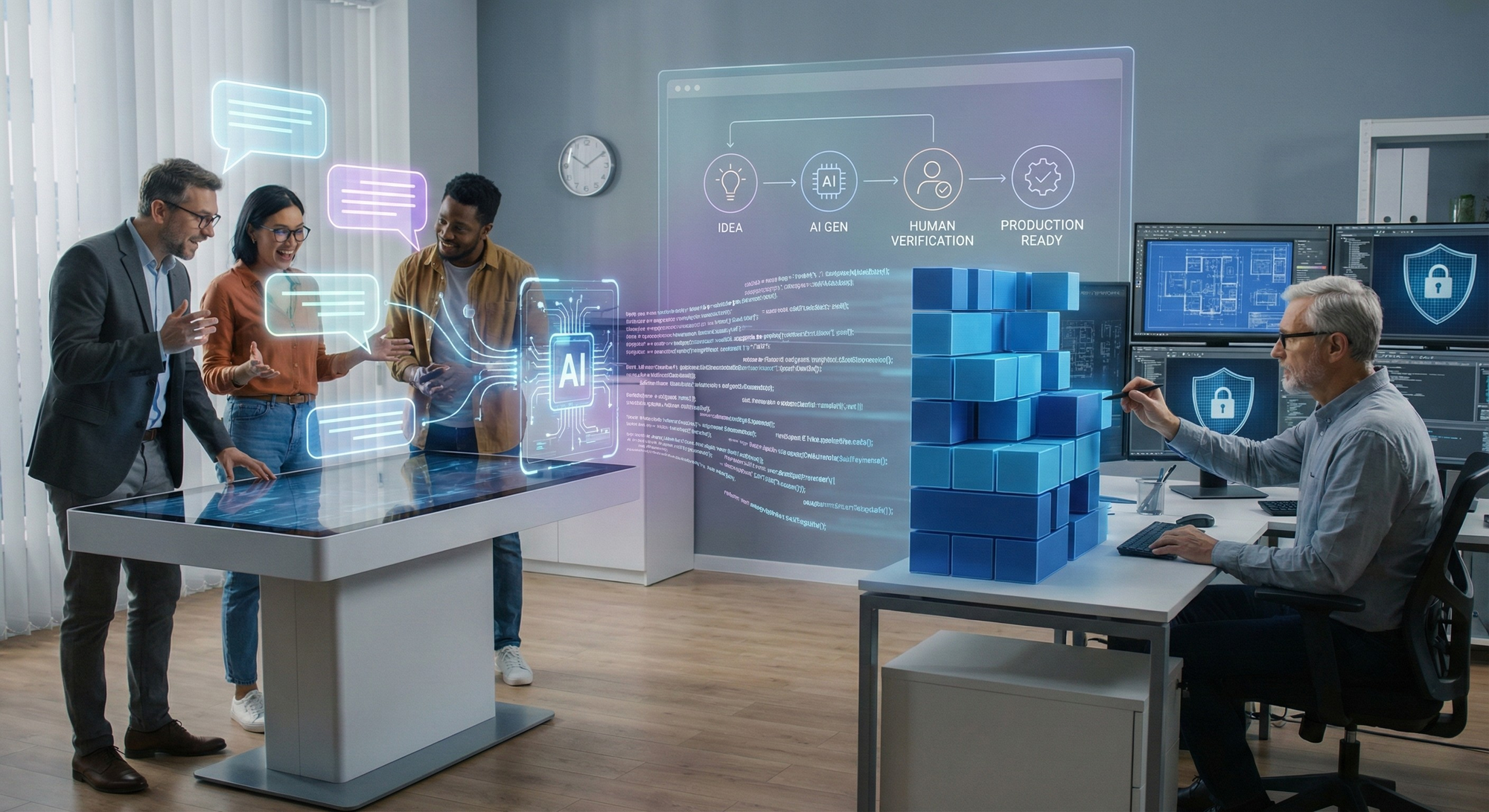
Example workflow: “CEO prototype to production” without career drama
- CEO or PM vibe codes a prototype that proves the user flow.
- Engineer reviews the prototype and extracts a spec: data model, APIs, risks.
- Team rebuilds core components with tests, observability, and security requirements.
- AI remains in the loop for boilerplate and refactors, but merges require human verification.
This keeps the speed benefits while preventing the “prototype becomes production by accident” trap.
FAQs
Is vibe coding a threat to software engineers in private companies?
It can be a threat to low-scope work, especially if teams confuse “it runs” with “it is production-ready.” In community debates, some worry that clients will care only about outputs, not who produced them. The safer bet is that hiring shifts toward people who can validate, secure, and operate software, not just generate code.
Who benefits most from vibe coding today?
Leaders and PMs benefit for prototyping and alignment. Seniors benefit because they can use AI aggressively while spotting flaws.
What should juniors do right now?
Make “judgment” your differentiator: testing, debugging, code review, threat modeling basics, and learning how real systems fail in production.
Conclusion
Vibe coding is widening the set of people who can turn ideas into working software artifacts, especially prototypes. That is why the “PM and CEO as builder” theme is catching on, and why juniors feel pressure when basic implementation becomes cheaper. But the practical end state is not “no more engineers.” It is “different engineers.” As code generation gets easier, the scarce skills shift to problem framing, verification, security, architecture, and operational ownership. Teams that win will be the ones that let CEOs and PMs prototype freely, but require engineering discipline before anything becomes production. And individuals who want to stay valuable should lean into the parts AI does not reliably do: judgment, reliability, and accountability.