MCP Explained: Why Model Context Protocol Matters in 2026
Anil Yarimca
TL;DR
Model Context Protocol matters because AI agents are moving from isolated prompts to long-lived, tool-connected systems. As agents start working across files, tools, and workflows, context becomes an operational dependency, not a prompt detail. MCP is an attempt to standardize how that context is structured, shared, and controlled.
What MCP is, in plain terms
Model Context Protocol is about one core problem: how an AI agent knows what it knows.
In early AI usage, context was simple. You sent a prompt. The model responded. Everything reset on the next call.
That breaks down immediately in real systems.
Modern AI agents need access to:
- Files and documents
- Past actions and decisions
- Tool results
- System state
- Business rules
- User-specific constraints
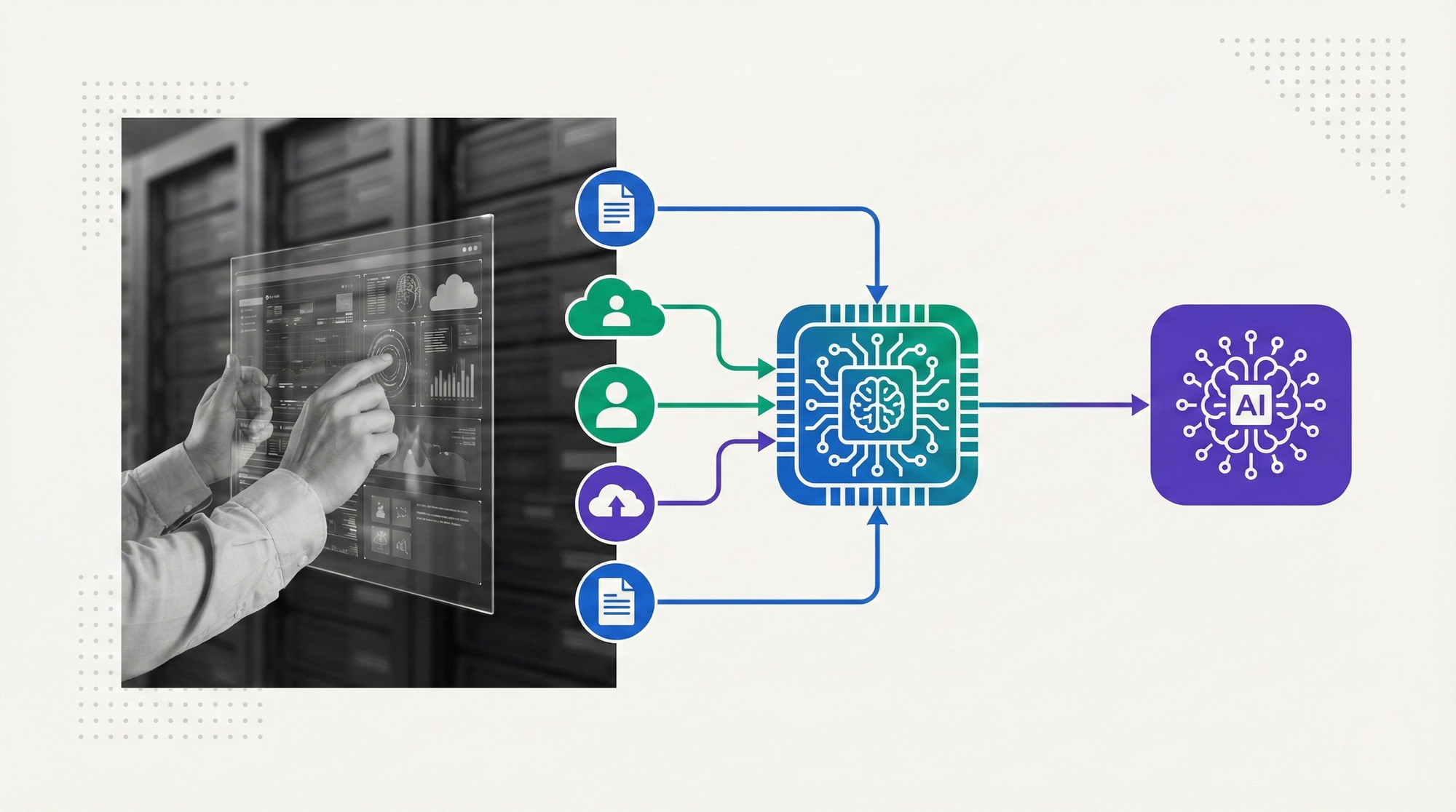
MCP is a protocol that defines how this context is provided to models in a structured, repeatable, and auditable way, instead of relying on ad hoc prompt stuffing.
If you are asking “what is MCP protocol” in practical terms, the answer is this: it is an interface contract between an AI model and the external world that supplies its context.
Why context is now a production problem
In 2024 and 2025, most teams underestimated context.
They focused on prompts, models, and tools. Context was treated as a big text blob passed into the model.
That approach does not scale.
As soon as you build MCP-style AI agents that:
- Run for long periods
- Call tools repeatedly
- Make decisions over time
- Coordinate with other agents
you hit hard problems:
- Context becomes too large
- Context becomes stale
- Context becomes inconsistent
- No one knows which context influenced which decision
In production, this is not a performance issue. It is a reliability and trust issue.
This is why context engineering is replacing prompt engineering as the real bottleneck.
What Model Context Protocol tries to standardize
MCP is not about making models smarter. It is about making systems safer and more operable.
At a high level, Model Context Protocol aims to standardize:
- How context sources are defined
- How context is fetched and refreshed
- How context is scoped per agent or task
- How context changes are tracked
- How tools and models agree on what context exists
Instead of embedding everything into a single prompt, context becomes modular and addressable.
This mirrors patterns already common in distributed systems, where state and configuration are explicit rather than implicit.
Anthropic’s public documentation around MCP frames it as a way to connect models to external tools and data sources in a controlled manner, rather than relying on bespoke integrations.
MCP vs prompts
It is useful to be very clear here.
Prompts tell a model how to behave.
MCP defines what the model can see.
With prompts:
- Context is static
- Everything is mixed together
- Debugging is difficult
- Auditing is nearly impossible
With MCP-style context:
- Context is structured
- Sources are explicit
- Updates are controlled
- Decisions are traceable
This is why MCP matters more as agents become operational components rather than chat interfaces.
MCP and AI agents
MCP AI agents are not a new type of model. They are agents that operate with structured, protocol-driven context instead of free-form prompt context.
In practice, this enables:
- Multiple agents sharing consistent context
- Agents accessing files and tools without embedding them in prompts
- Clear separation between reasoning and state
- Safer tool calling based on scoped context
This is critical when agents collaborate or hand off work. Without a protocol, each agent ends up with its own partial and drifting view of reality.
With MCP, context becomes a shared contract.
Why MCP matters specifically in 2026
2026 is when several trends collide.
First, agents stop being side experiments and start running inside core workflows.
Second, tool calling becomes standard. Agents do not just reason. They act.
Third, governance pressure increases. Security, compliance, and auditability become non-negotiable.
In that environment, unmanaged context is a liability.
MCP matters because it gives organizations a way to reason about:
- What data an agent can see
- Where that data comes from
- How fresh it is
- How it is revoked or updated
- How decisions can be explained later
This is not theoretical. It is an operational requirement.
MCP does not replace orchestration or workflows
One common misunderstanding is thinking MCP replaces workflows.
It does not.
MCP solves how context is delivered to a model.
Workflows solve when models and tools run, how failures are handled, and how humans are involved.
In production systems:
- Workflows orchestrate execution
- MCP supplies context
- Agents reason and decide
- Tools execute actions
If you skip workflows, MCP alone does not save you.
If you skip MCP, workflows end up pushing fragile context into prompts.
You need both.
Risks and failure modes
MCP is not magic. It introduces its own risks if used poorly.
Over-sharing context
If everything is available to every agent, you recreate the same problems as giant prompts, just with better tooling.
Stale context
Protocols do not automatically guarantee freshness. You still need rules for when context is refreshed or invalidated.
Hidden coupling
If many agents depend on the same context source, changes can have wide impact unless versioning is handled carefully.
False sense of safety
A protocol does not replace validation, monitoring, or human oversight.
MCP makes problems visible. It does not solve them automatically.
How MCP fits into intelligent process automation
MCP becomes powerful when combined with intelligent process automation.
In that setup:
- Context sources are defined explicitly
- Agents consume context through MCP
- Decisions are made with traceable inputs
- Workflows enforce boundaries and escalation
- RPA and integrations handle execution
This is how MCP stops being an AI curiosity and becomes part of a production architecture.
Example scenario
Consider a document-heavy compliance workflow.
Without MCP:
- Files are pasted into prompts
- Business rules are duplicated
- Decisions are hard to explain later
With MCP:
- Documents live in a file context provider
- Rules live in a policy context provider
- Past decisions live in a history context provider
- The agent reasons over references, not raw text
- The workflow logs which context versions were used
The outcome is not just better accuracy. It is explainability and control.
FAQs
What is MCP protocol in simple terms?
It is a standard way to give AI models structured access to context like files, tools, and state, instead of embedding everything in prompts.
Is MCP required to build AI agents?
No, but as agents become long-lived and operational, ad hoc context handling becomes a major liability.
Does MCP replace prompt engineering?
No. Prompts still matter for behavior. MCP defines what information the model can access.
Are MCP AI agents safer by default?
They are easier to control and audit, but safety still depends on workflows, permissions, and monitoring.
Is MCP tied to a specific vendor?
No. It is a protocol concept. Different platforms can implement it in different ways.
When should teams start caring about MCP?
When agents touch production workflows, call tools, or need explainability and governance.
Conclusion
Model Context Protocol matters because AI systems are growing up.
As agents move from chat experiments to operational components, unmanaged context becomes one of the biggest sources of failure and risk. MCP is an attempt to bring structure, visibility, and control to that layer.
In 2026, the teams that succeed will not just have better models. They will have better context contracts, better workflows, and clearer boundaries. MCP is not the whole solution, but it is a sign that the industry is finally treating context as a first-class system concern.